Setting Up Your Own Self-Hosted NAS
I built my first self-hosted NAS because I wanted control over my data and a reliable place for backups. I care about encryption, automation and keeping things low-drama. This is the route I’d use again: pick sensible hardware, keep the storage layout simple, and automate the boring parts without pretending the box looks after itself.
Introduction to Self-Hosted NAS
The rise of self-hosted solutions
Home and small-scale self-hosted setups are not just hobby projects any more. Cheap low-power hardware, mature container tooling and software like Docker and Proxmox let one machine run file services, apps and automation without much fuss. A self-hosted NAS means you own the stack, and you also own the maintenance, the backups and the mistakes.
Importance of data privacy
If privacy matters, a self-hosted NAS keeps the data under your control. I run encrypted datasets for sensitive folders and keep critical backups offline. Encrypt-at-rest and encrypted replication reduce the risk if a drive leaves the house or someone gets network access. Self-hosted does not mean secure by default. The hardware and the configuration decide that.
Overview of NAS configuration
A practical NAS has three layers: hardware, storage layout and services. Hardware gives persistence and performance. Storage layout decides redundancy and rebuild time. Services are SMB/NFS for file shares, a web UI for management, and optional apps like Nextcloud or Plex. Automation sits across those layers: monitoring, snapshot rotation and automated replication.
Practical Steps for Automation
Choosing the right hardware
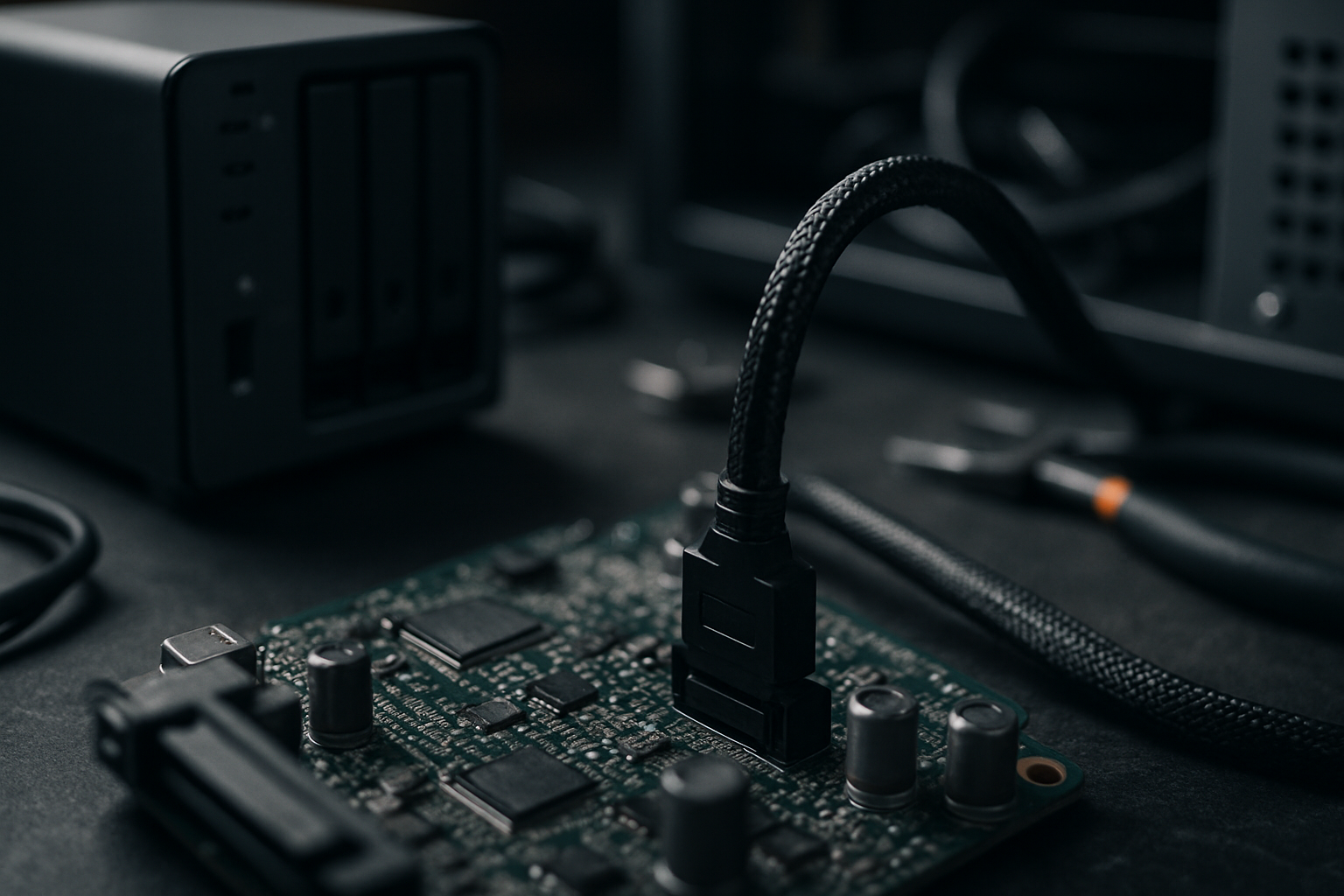
Pick a chassis that fits your needs, not the fanciest spec sheet. For most people, a modest quad-core CPU, 8–16 GB RAM and four hot-swap bays is sensible. Choose enterprise-grade drives if you depend on the box every day; for bulk media, a mix of NAS-grade drives and a low-power cache drive can work. I prefer ECC RAM for long-term reliability when running ZFS. If money is tight, a single-board computer with external drives can work for file sync and lightweight apps, but I would not use that for primary storage.
Concrete example: an ASRock J5040 mini-ITX board, 16 GB ECC, four 8 TB NAS drives in RAID-Z1 or RAID-Z2 is a realistic mid-range build. It keeps power use modest and gives reasonable rebuild times.
Software options for automation
I favour ZFS for storage because snapshots, checksums and send/receive replication make automation simpler and more reliable. For orchestration, use systemd timers or a container orchestrator like Docker Compose. Combine ZFS snapshots with periodic zfs send to a remote host for automated replication.
Example toolchain:
- ZFS for filesystem and snapshots.
- Samba for SMB shares and NFS for Unix clients.
- Docker Compose for apps like Nextcloud, Syncthing or Photo managers.
- Prometheus + Grafana, or a simpler pushgateway + alerting script for monitoring.
- rsync/zfs send for backups and replication.
Setting up your NAS for success
Keep automation small and obvious. Create snapshot schedules, retention policies and replication rules from day one.
Practical steps I use:
- Create a ZFS pool with a clear dataset hierarchy: data/home, data/backups, apps. Keep metadata-heavy services on separate datasets.
- Configure snapshot cadence: hourly for active data, daily for user files, weekly for long-term. Use simple naming like hourly-YYYYMMDD-HHMM.
- Automate snapshot pruning. A single script can remove snapshots older than defined retention rules. Run it with systemd timers or cron.
- Automate replication with quiet windows to avoid peak-hour strain. For example,
zfs send | sshto a remote host every night. Use incremental sends to reduce bandwidth. - Use declarative app deployment. Docker Compose files live in a git repo. I tag versions and deploy with a short script so rollback is one command.
Verification matters: test restores weekly. I restore a few random files from snapshots and test booting a container from the replicated host. Automation without restore tests is just hope with logging.
Common pitfalls to avoid
Overcomplicating early is the quickest way to make a mess. I see three repeated mistakes.
- Bad backups: relying on a single off-site sync without versioned snapshots. Replication should keep history.
- Ignoring rebuild times: mixing very large drives with a single parity vdev leads to long rebuilds and higher failure risk. Plan vdevs for rebuild time and fault tolerance.
- Blind automation: cron jobs that fail silently. Always log to a central place and set simple alerts on failures. A one-line email or Telegram alert on
zfs sendfailure saves hours later.
Concrete example: a four-drive RAID-Z1 with 16 TB spindles can take days to resilver. If a second drive fails during that window, data loss follows. I prefer RAID-Z2 or two mirrored vdevs for large spindles.
Future-proofing your setup
Plan for growth and change. Use standard interfaces and avoid vendor lock-in. ZFS datasets and Docker Compose are portable. Keep enough spare SATA ports or add a HBA card now, not later. Document the network layout, NAS configuration and recovery steps in plaintext in a repository. That file is worth far more than memory when you come back to it six months later.
Hardware tip: separate the boot device from the storage pool. Use a small mirrored SSD for the OS and keep the data pool on separate drives. That makes OS reinstall or migration simpler.
Community resources and support
Community knowledge is where practical problems get fixed. Subreddits, forum threads and project docs cover compatibility quirks and sample configs. I read project release notes and migration guides before upgrading ZFS or Docker versions. If you ask for help, include your exact hardware and config snippets. Real examples save time.
Concrete starting points:
- Project docs for ZFS, Samba and Nextcloud.
- Git repos with example Docker Compose files for common self-hosted apps.
- Active forum posts that match your hardware for firmware quirks and HBA compatibility.
A self-hosted NAS is a long-term tool, not a weekend toy. Keep the automation simple: snapshots, retention, replication and alerts. Pick hardware that balances rebuild time and cost. Keep configs declarative and document recovery steps. Then test the restores. That is what keeps the box useful when things go wrong, which they will.