
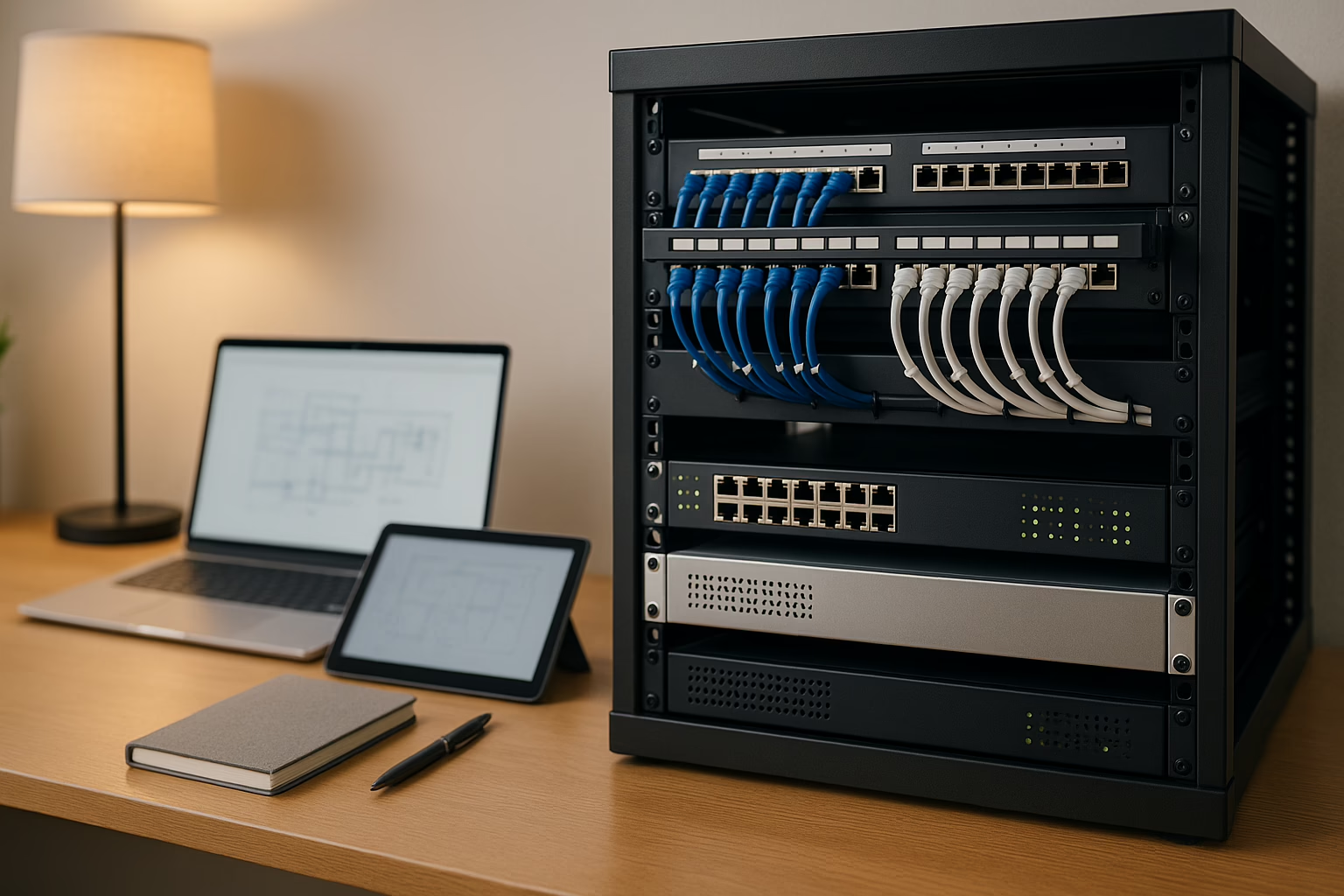
Maintaining a well-documented homelab is essential for both efficiency and future scalability. As home labs become increasingly popular among tech enthusiasts and IT professionals, the need for effective documentation practices cannot be overstated.
Documentation not only aids in troubleshooting and management but also serves as a valuable resource for future modifications and expansions. This article explores key strategies and tools for documenting your homelab effectively, ensuring that your setup remains organised and functional over time.
Why documentation is crucial
Documenting your homelab provides several benefits, including facilitating troubleshooting, aiding in future upgrades, and serving as a reference for others who may work on your setup. A well-maintained record can save significant time and effort when addressing issues or when integrating new technologies. According to a post on Smart Home Gadget Lab, clear and organised records of network devices and configurations can prevent headaches in the long run.
Best practices for effective documentation
To ensure your homelab documentation is both practical and comprehensive, consider the following best practices:
- Maintain a central repository: Use platforms like GitHub or GitLab to store your documentation, making it easily accessible and version-controlled.
- Use clear and consistent formatting: Establish a standard format for documenting configurations, processes, and changes to ensure clarity.
- Include diagrams and visuals: Visual aids such as network diagrams can enhance understanding and provide quick references for complex setups.
- Document changes promptly: Keep your documentation up to date by recording changes as they occur, rather than trying to remember them later.
Tools to aid in documentation
Several tools can streamline the documentation process for your homelab:
- Obsidian: A powerful note-taking tool that allows for linking notes and organising information effectively.
- NetBox: An open-source tool designed for documenting network infrastructure, which can be invaluable for managing complex setups.
- Markdown editors: Using Markdown for documentation can simplify formatting and make it easy to convert to various formats.
Creating a future-ready documentation strategy
As your homelab evolves, it is important to develop a documentation strategy that can adapt to future needs. This includes considering scalability, potential integrations, and the introduction of new technologies. Regularly review and update your documentation practices to ensure they align with your current setup and future goals.
Conclusion
Effective documentation of your homelab is not just a matter of preference; it is a necessity for maintaining a functional and efficient setup. By implementing best practices and leveraging the right tools, you can create a comprehensive reference that will serve you well in the years to come. Remember, well-documented systems not only enhance your own understanding but also provide a valuable resource for anyone who may work on your homelab in the future.