A dark lab build only works when the same input gives the same image every time, and an automated build pipeline is only useful if it is boring in all the right places. Pin everything, trust nothing that changes behind your back, and leave no mystery state under the floorboards.
I’ve lost enough evenings to home lab automation pitfalls to know the real trouble starts with small defaults, not big failures. ACL permission models that break as infrastructure grows are usually a sign I should have kept names, rules, and restores much simpler from the start.

I keep Nextcloud for daily use, but the real safety net sits off the box. A digital keepsakes backup strategy only starts to make sense when restores are boring, not hopeful, and I have learned not to trust a single copy with anything I cannot replace.
Multi-tenant data isolation failures happen when scope checks live at the presentation layer instead of the query layer. Lloyds learned this the hard way; I'll show you why it matters in your homelab too.

Discover the Amazon Fire TV Stick HD and more tech deals this week.
Running n8n in your homelab without proper isolation is a liability. CVE-2025-68613 lets authenticated users execute code with container privileges; if that container sits on your default Docker network, lateral movement to Vaultwarden or PostgreSQL is trivial. I'll show you how to lock it down and recover cleanly when patching comes late.

Running a local model means no quota walls, no token metre ticking, and no surprise bills when the agent loops through ten reasoning steps. Cloud coding assistants collapse under agentic use; local agentic AI coding doesn't.
Most home routers allow everything outbound by default, which is exactly how AVRecon persisted undetected for six years. A stateful firewall with explicit outbound rules and network segmentation closes that door; residential proxy detection starts with knowing what your devices actually need to connect to.
Health data inside a corporate platform means health data inside a jurisdiction you do not control, encrypted or not. Self-hosting it locally—with proper backups and audit trails—trades convenience for actual ownership; for medical records, that trade is worth making.
A compromised host on a flat network can reach every other node without crossing a single firewall rule. Network perimeter checks are useless if the interior is trusted by default; that is where lateral movement prevention actually matters.
A 48-hour gap between exploit discovery and patch deployment is normal, not exceptional. Browser isolation in your homelab is not about making the browser safe; it is about making sure a compromised renderer cannot reach your services.
Discover the Amazon Fire TV Stick HD and more tech deals this week.
Running untrusted AI agents in standard Docker containers leaves you exposed to kernel exploits that bypass every namespace and policy you've layered on top. MicroVMs add a hardware boundary that changes the threat model entirely; a container escape reaches the guest kernel, not your host or NAS.
Operation Synergia III sinkholed 45,000 botnet and malware IPs across 72 countries with law enforcement backing. That chain of custody makes the data worth blocking at your firewall; the catch is that C2 operators rotate fast, so treat it as a high-confidence historical list, not a live feed.
I've built systems that swap differently depending on what dies first: the CPU or the storage. Zram and zswap solve adjacent problems, and picking the wrong one costs you either write cycles or latency.
Discover the Blink Outdoor 4 camera and three more tech deals this week.
I deployed Claude via Azure AI Foundry assuming startup credits would cover it. The $1,600 invoice arrived mid-cycle, charged directly to my card. Microsoft's documentation never mentions that third-party marketplace models bypass credits entirely.
Google doesn't publish ARM64 Chrome. Chromium fills that gap on Debian-based ARM64 Linux systems, and any CDP automation library works identically against it. Pin the version, fix `/dev/shm`, work around the M113 CDP bind change with socat, and you've got a solid headless setup.
The trust UI lies by omission. A valid signature proves only that someone with a private key signed the file, not that the signer is the vendor you intended. Storm-2561 distributes trojanised VPN clients with legitimate signatures issued to shell companies. Four minutes of verification stops it cold.
Check out these top Amazon deals including Stellar Blade for PS5 at £28.6.
A single compromised credential reaching both production and backup storage across the same network boundary turns one day's data loss into months or years. Isolation done badly is barely isolation at all.
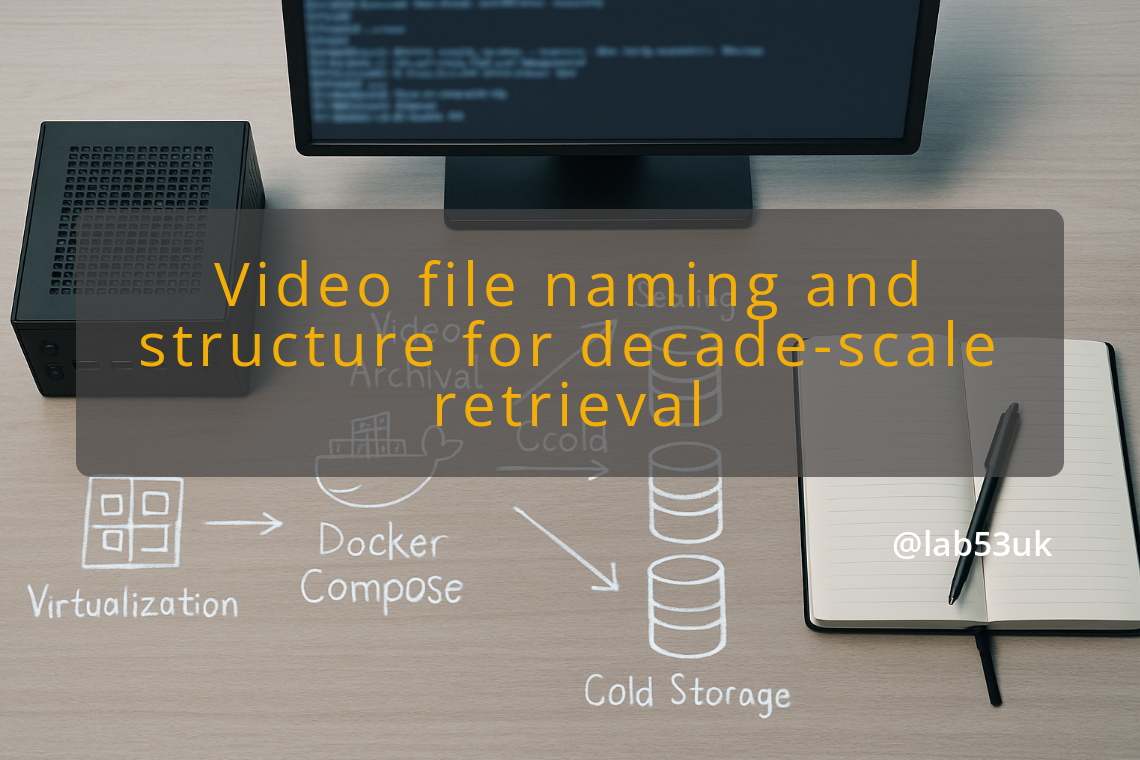
A video archive you cannot read a decade later is just a warm drive waiting to die. Ambiguous filenames and missing verification schedules kill cold storage video archival; fix those two things, and the rest is manageable.
Encryption without object lock is a half-measure. A misconfigured script or compromised service account can still wipe everything, which is why S3-compatible storage on a homelab needs layered defence: encryption at rest, API-enforced write and delete rules, and backups that survive the worst realistic failure.
Discover the Ring Outdoor Camera Battery and two more Amazon tech deals this week.
I've built backup jobs that looked fine right up until the restore failed. The gap between what you think is covered and what actually is covered lives in the space where documentation should be; write down what is excluded, not just what you protect, and you stop arguing about it later.