




Repurposing SwitchBot Button Pushers for Smart Home Automation
I had a pile of SwitchBot button pushers after switching some lights to Lutron. They still work and they still click. I kept one and started testing ways to reuse them around the house. This guide shows practical, hands-on uses and the exact checks I run before mounting one to a device. No fluff, just what works.
Practical Uses of SwitchBot Button Pushers
Triggering Non-Smart Appliances
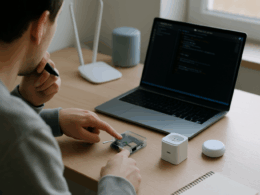
A SwitchBot button pusher excels as a physical actuator for devices that only have a mechanical button. Think coffee machines, old radios, fan power switches and treadmill start buttons. Mount the pusher so the plunger hits the button squarely. Use 3M VHB tape or a small bracket from a makerspace. Measure the button travel first. If the button needs 3–5 mm of travel, set the pusher so it delivers that range without bottoming out the mechanism.
Concrete example: I mounted a pusher to an old Nespresso by sticking a small acrylic spacer behind the pusher foot. The SwitchBot hits the metal power switch cleanly and returns. I set the schedule in the SwitchBot app to wake me at 07:30. The coffee comes on before my cereal is gone.
Automating Everyday Tasks
Use button pushers to automate routine, physical-only tasks. Timers, bedside alarm buttons, or the power on for a legacy hi‑fi system are good candidates. Pick tasks that:
- happen regularly,
- tolerate the pusher’s mechanical cycle time (a second or two),
- do not require rapid repeated presses.
Step-by-step for a simple scheduler:
- Fit the pusher so it presses reliably without slipping.
- Give it a name in the app that matches the task.
- Create a schedule in the SwitchBot app or your hub for the time and repeat pattern.
This replaces a trip to the device with an app action or automation scene. It does not convert the device into a smart device, but it buys you remote control and timing.
Integrating with Existing Systems
If you keep a SwitchBot Hub, the pushers can join broader smart home automation. The Hub creates cloud access and often lets you link to platforms like Alexa, Google, or local controllers such as Home Assistant. That lets you trigger a physical press as part of a routine.
Example automation: when a motion sensor trips at night, Home Assistant can tell the SwitchBot Hub to trigger a bedroom lamp using a pusher. The lamp remains a dumb lamp, but the automation scene treats it like part of the whole. If you do not keep a hub, you still have local Bluetooth control from a phone or a nearby controller.
Creating Custom Automation Scenes
Button pushers are ideal for bespoke automation scenes where standard integrations don’t exist. Combine a pusher with:
- a door sensor to press a kettle switch when the back door opens,
- a temperature sensor to press a fan’s power at a threshold,
- a smart button to trigger several pushers in sequence.
Design the scene so the pusher acts only when mechanical action is safe. For example, do not press a stove or microwave controls remotely. Keep scenes to low-risk power or signalling buttons.
Exploring Community Suggestions
I checked forums and a Reddit thread where people asked for reuse ideas after moving to Lutron. Common suggestions included:
- using a pusher as a backup physical remote,
- triggering timers or scene triggers that lack digital inputs,
- mounting to legacy gear like amplifiers or projectors.
Those ideas are practical. If a device has fragile buttons or sensitive electronics, prefer a soft spacer to distribute force. If you are unsure, test with a single press and inspect the contacts.
Additional Considerations
Assessing Compatibility with Devices
Not every button is a good match. Check these points before mounting:
- Button profile: flat buttons are easiest. Concave or recessed buttons may need a small adapter plate.
- Travel and resistance: heavy tactile switches may shorten actuator life.
- Safety: never press fridge defrost buttons, gas appliance controls or anything that affects safety systems.
I measure throw and press force with a small scale or by feel. If a button is hard to press, either avoid or use a lever to reduce required force.
Maintenance and Troubleshooting
Treat a pusher like any small mechanical device. Batteries die. Adhesive weakens. Things move. Keep these habits:
- Replace the CR2 battery when app reports low battery, or every 6–12 months with frequent use.
- Check alignment monthly for outdoors or humid locations.
- Use a bit of silicone grease if the plunger sticks.
If a pusher loses accuracy, re-seat it. Small shims from an old card often fix alignment. If the motor hums but no press happens, the adhesive slipped or the foot is worn.
Exploring Alternative Solutions
If the pusher is a poor fit, alternatives include:
- a relay module inside the device if you are comfortable opening it,
- an inline smart plug for power switching rather than pushing a button,
- an infrared blaster for appliances with remote controls.
A relay gives cleaner control but needs basic electronics work. A smart plug works for devices that truly power cycle on the mains. Choose the simplest solution that keeps the device safe.
Future-Proofing Your Setup
Think about long-term use. I label each pusher with a permanent marker and keep a small sheet of notes: device name, press cadence, alignment trick. That helps if you upgrade later or hand the setup to someone else. If you keep the SwitchBot Hub, it makes future integrations simpler. If you plan to migrate to a different ecosystem, prefer non-destructive mounts and keep any original parts.
Community Resources and Support
Forums and Reddit threads contain lots of practical adapters and 3D-print files for custom brackets. Search for device-specific mounts before designing your own. Community photos often show clever spacer ideas that save time. If you post, include the device model, the button measurements and a picture of your mounting area. That produces useful replies quickly.
Final takeaways: pick non-critical buttons, measure first, use non-destructive mounts, give each pusher a clear role, and decide whether to keep a hub for deeper integrations. A SwitchBot button pusher is a cheap, low-risk way to extend smart home automation into the mechanical world.